Avoid Kettle Boilovers: BA Publishes New Resource
The Brewers Association has issued new guidance to help prevent dangerous boilovers in the brewhouse.
Showing 461-480 of 870 articles

The Brewers Association has issued new guidance to help prevent dangerous boilovers in the brewhouse.

New hop-derived products for aroma and flavor are appearing faster than brewers can learn how best to use them. Stan Hieronymus is here with a primer.

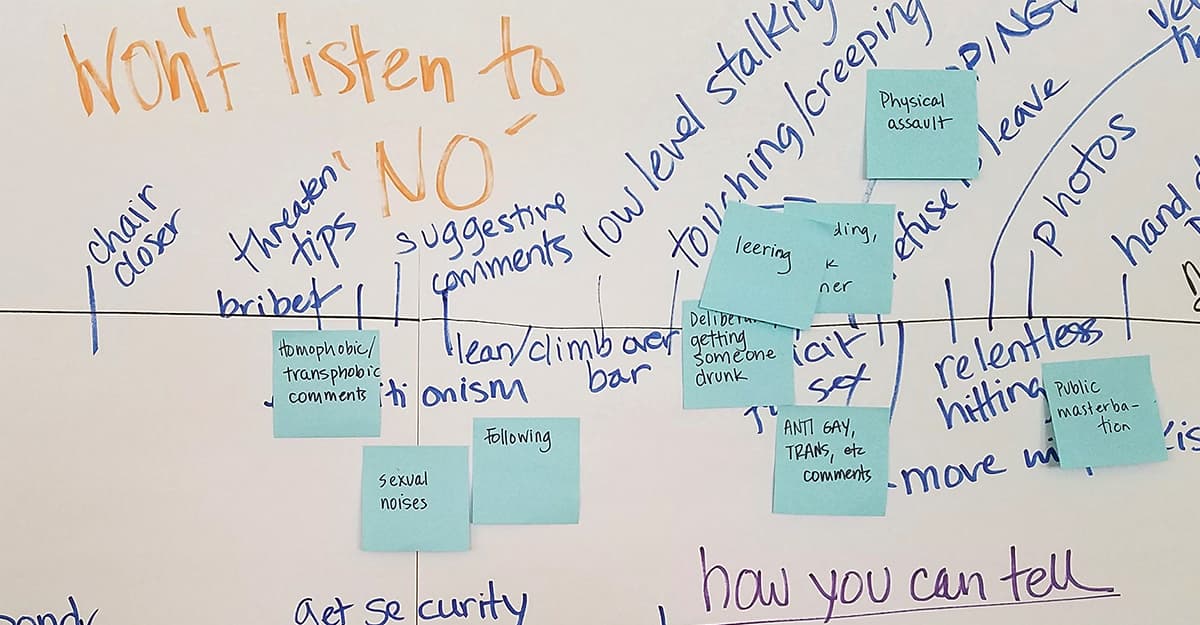
The recent social media–fueled reckoning in the beer industry has led to a new open-source collaboration. Brave Noise aims to continue the conversation about sexism, discrimination, and workplace culture at breweries worldwide.

As unfilled hospitality jobs set new records, breweries may need to reconsider pay, benefits, and culture to better lure and keep good people.

Two Roads cofounder and brewmaster Phil Markowski has embraced hard seltzer as a beverage that has its time and place. Here, he discusses the development of their groundbreaking H2Roads hard seltzer.

Brewers have never had more choices when it comes to yeast, and the arrival of new strains is accelerating thanks to selective breeding and gene editing. Bespoke yeasts, anyone?

The rising interest in hard seltzer and other not-so-beery beverages—including kombucha, wine, coffee, and more—has led to new looks at existing gear in the brewhouse—as well as investments in equipment or partnerships that could have wider benefits.

With inflation and supply-side costs in the headlines, many breweries are wondering whether now is the time to raise prices in their taprooms or on shelves. But experts warn not to make that decision too quickly.

Was Heater Allen brewing lager before it was cool? Trick question. Lager has always been cool—it just took the rest of you a while to catch on. Here, the daughter-father team Lisa and Rick Allen lay out their approach to running a lasting niche business.

Here’s how new yeasts are taking advantage of genetic editing and modification to free up thiols—not only in hops, but also in barley malt—for more expressive tropical aromas and flavors.

A lack of shipping containers in Europe has made it impossible for many North American brewers to get malts they rely on for some of their most important beers. It’s unclear when the situation will improve.

Are proper craft-beer bars and bottle shops in danger? As thousands of breweries coalesce around profitable taprooms and a handful of trendy styles, craft beer may be losing a piece of its soul. Greg Engert of the Neighborhood Restaurant Group explains.

It’s not standard equipment in every malthouse, but many maltsters large and small are using their own pilot breweries to test, demonstrate, and help customers get the best possible malt for their needs.

For Ninkasi Brewing in Eugene, Oregon, the benefits of developing hard seltzer expertise and its Pacific Sparkling brand far outweighed the product’s perceived lack of romance.

Knowing the aroma compounds that better survive the brewing process—and how best to use those that don’t—can help brewers get more from their hop additions and blends.

New Orleans’ Urban South outpaced its own ambitious goals for Louisiana. Now it’s thinking big in Texas—and beyond.

As prices increase on everything from PakTech carriers to cardboard, here’s how breweries are thinking creatively—and sustainably—to reduce costs.

David Walker, cofounder and CEO of Firestone Walker in Paso Robles, California, shares some thoughts on management after a quarter-century of building a brewery into a widely respected, award-winning regional powerhouse.

After initially underestimating the challenge of brewing hard seltzer as well as its sales potential, Evan Price and his team at Green Cheek are taking the Le Squawk brand in new and more flavorful directions.

The creator of the Black Is Beautiful initiative reflects on that experience as well as the intention that led to the launch of his San Antonio brewery.