

When Juice Andrews sidles up to the bar at Seattle’s Queen Anne Beerhall, he doesn’t need to utter a word to get his order across. Instead, he puts his right hand in the air, points his fingers toward the bartender, and wiggles his hand back and forth to mimic the motion of a swimming fish. A few moments later, a gleaming pint of freshly poured beer from Ghostfish Brewing glides across on a coaster.
Maybe when you’re the bar’s owner, as Andrews is, you don’t even need to say, “I’ll have the usual.” Or maybe when a particular beer is the only one you drink, your order goes unspoken. Either way, the improvised sign language is a testament to his status as a Ghostfish superfan. That affinity blends the personal and the professional for Andrews, who was diagnosed with celiac disease shortly after opening the bar in 2015. His group now operates three bars and restaurants in the city, all of which carry Ghostfish on draft.
“I’m not understating this at all,” Andrews says. “It means the world to me that I can still have a beer regularly, consistently. They just want to be a great [brewery] that happens to be gluten-free. I love that approach.”
That niche has served Ghostfish well. The 11-year-old brewery has cultivated deep loyalty among gluten-free drinkers, and the team is now working to broaden Ghostfish’s appeal beyond that demographic. All of its beers are entirely gluten-free, brewed with malted millet, buckwheat, corn, rice, and other gluten-free grains. Ingredients that contain gluten are prohibited in the production facility.
The brewery produced just shy of 7,000 barrels last year between its Seattle headquarters and a dedicated contract facility in Westfield, New York, that has supplied East Coast accounts. Demand has outpaced supply in recent years, especially after AB InBev discontinued production of gluten-free brand Redbridge last year; stalwart Canadian brand Glutenberg has also disappeared from shelves and reportedly closed). That’s left a gap for widely available gluten-free beer nationally, and Ghostfish has ambitious plans to fill it.
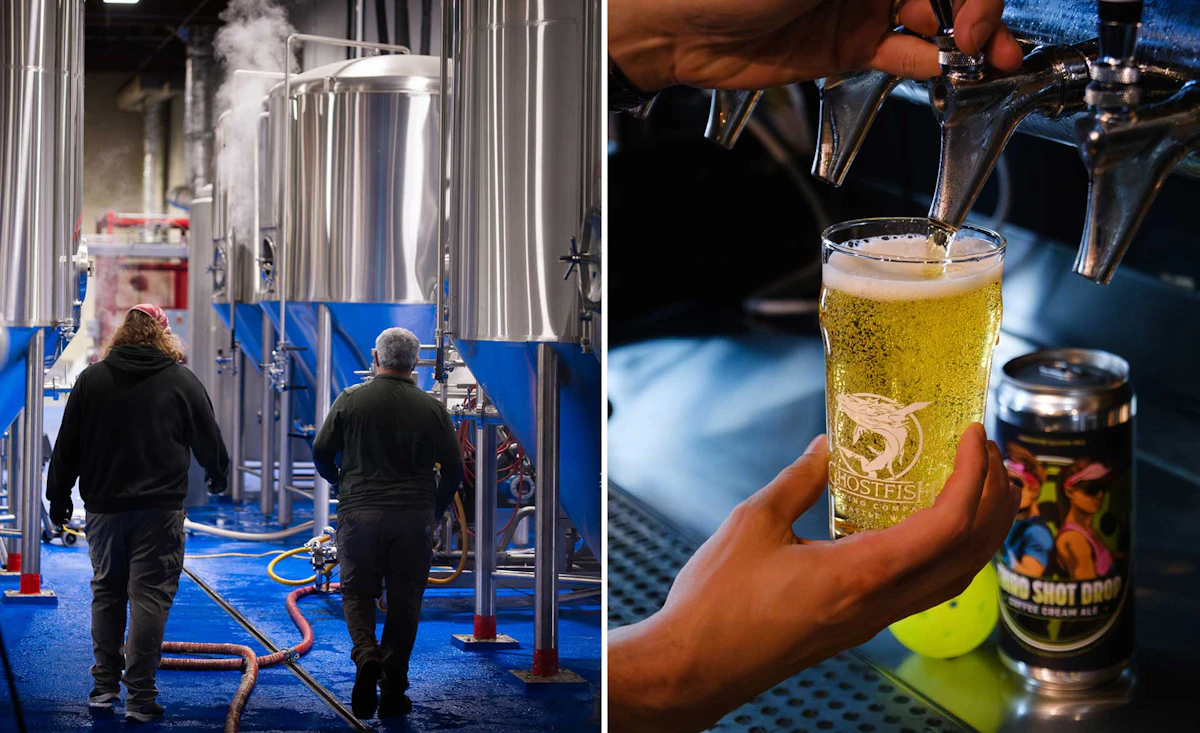
In December 2025, Ghostfish announced it had purchased the former Pike Brewing facility from Green Lake Brewing, the parent company of both Pike and Fremont Brewing. Located less than three miles from Ghostfish’s current brewpub, the 26,000-square-foot facility adds enough capacity for the brewery to comfortably produce seven times its current volume. That expansion also should make the East Coast contracting relationship unnecessary, as Ghostfish brings that production in-house in Seattle.
That expansion of production also means the brewery will finally be able to fully meet demand from existing accounts as well as service new markets it hasn’t yet entered. Currently available in about 21 states, Ghostfish is in the process of expanding to other large markets, including Arizona and Michigan. It also secured its first placements in several states’ Kroger stores; those are set to launch with spring resets.
“While we’re in a lot of markets, in some cases we’re barely scratching the surface of what’s desired,” says cofounder Brian Thiel. In particular, he mentions California, the country’s second-largest beer market, as a state that still has “a lot of meat on the bone” for Ghostfish.
“For a long time, we hesitated getting into too many places even though they wanted us,” he says, “knowing that we just didn’t have enough beer to service that.”
From Niche to Normal
Gluten-free beer is a small subset of the overall industry, though Thiel says useful data on this segment of the market are almost impossible to find.
With Redbridge out of the picture, just a handful of craft brands exist to service the millions of Americans who have some level of intolerance to gluten. Reputable estimates indicate that 1 percent of the U.S. population has celiac disease, a serious autoimmune disorder triggered by gluten. Many more people have non-celiac gluten sensitivity, which means that consuming gluten triggers gastrointestinal distress, fatigue, joint pain, or other symptoms. There is no biomarker for this condition, and estimates of its prevalence range from 1 to 15 percent of the U.S. population.
Regardless of the precise statistics, there is undoubtedly growing awareness of gluten sensitivity, with millions of Americans attempting to reduce its presence in their diets. That’s to say nothing of the friends and family of people who have celiac disease or are gluten intolerant. Ghostfish’s beers, and its 100 percent gluten-free brewpub, are conduits for those people to come together socially over a shared experience.
“If I went downstairs in our taproom and tapped people on the shoulder to say, ‘Hey, are you gluten-free, are you celiac?’, the majority of people are not,” Thiel says. “But maybe they’re there with someone who is.”
Thiel himself was formerly married to someone with celiac disease. He credits her with helping him understand two things: first, that there was a real need for quality gluten-free beer; and second, that people who drink it don’t want the beer to seem inferior or medicinal. Those ideas remain Ghostfish’s north star.
By the nature of its beers, however, Ghostfish welcomes people who might not otherwise consider themselves beer drinkers. It’s arguably never been more important for craft breweries to attract new drinkers; survey data from the Brewers Association and Harris Poll suggest that while more Americans are drinking craft beer today than in years past, the people who do drink craft are doing so less often. Ghostfish appears well poised to both attract new drinkers and to retain its loyal fans. It’s making beer for people who might have assumed they couldn’t drink beer—and it might be one of the only beers they can or want to drink.
“To me it means it is just the ability to blend in and be normal,” says Andrews, who adds that he thinks he consumed more Ghostfish beer in 2024 than anyone else he knows. When the Seattle Mariners and later the Seahawks were on postseason tears in recent months, Ghostfish beers enabled him to go out to sports bars with groups of friends and drink what everyone else was drinking.
“It’s nice when people can show up and be themselves and not have to be catered to from a special menu,” Andrews says. “That means a lot.”
Taking Gluten-Free to the Mainstream
Dedicated gluten-free restaurants and natural-food stores are obvious channels in which to find those drinkers. Yet Ghostfish’s next chapter of growth depends on mainstream consumers in places such as Costco, King Soopers, and sports bars.
Given the availability of gluten-free products in mainstream stores—and with some of the largest players in the gluten-free arena now out of the picture—Ghostfish sees runway. Jenn Mauro, one of the brewery’s co-owners and its national sales manager, says she anticipates 15 percent growth this year as placements pick up.
That momentum builds on itself. Kroger, she says, was extremely data-driven in its approach to spring resets, so the Circana retail data that Ghostfish was able to provide through its national sales partnership with Countermeasures proved invaluable in securing that chain’s commitment. At a time when craft beer as a whole is trending downward in chain retail, Ghostfish has been able to demonstrate growth—and at a higher price point than some other growing brands.
“The relationships that we forge with our distributor partners have given them confidence in us and the ability to see that we have something that can grow and that gives them something different within their portfolio,” Mauro says. “We are a differentiator, although we are niche.”
That niche opens doors when there are 9,000 other breweries competing for shelf or draft placements, Mauro says. Ideally, she says, she’d like to see Ghostfish shelved in a dedicated gluten-free section of a retail store, or at the very least differentiated with a shelf-talker that indicates it’s gluten-free. Given the void left by Redbridge and Glutenberg’s exits, many gluten-free shoppers are on the lookout for other brands.
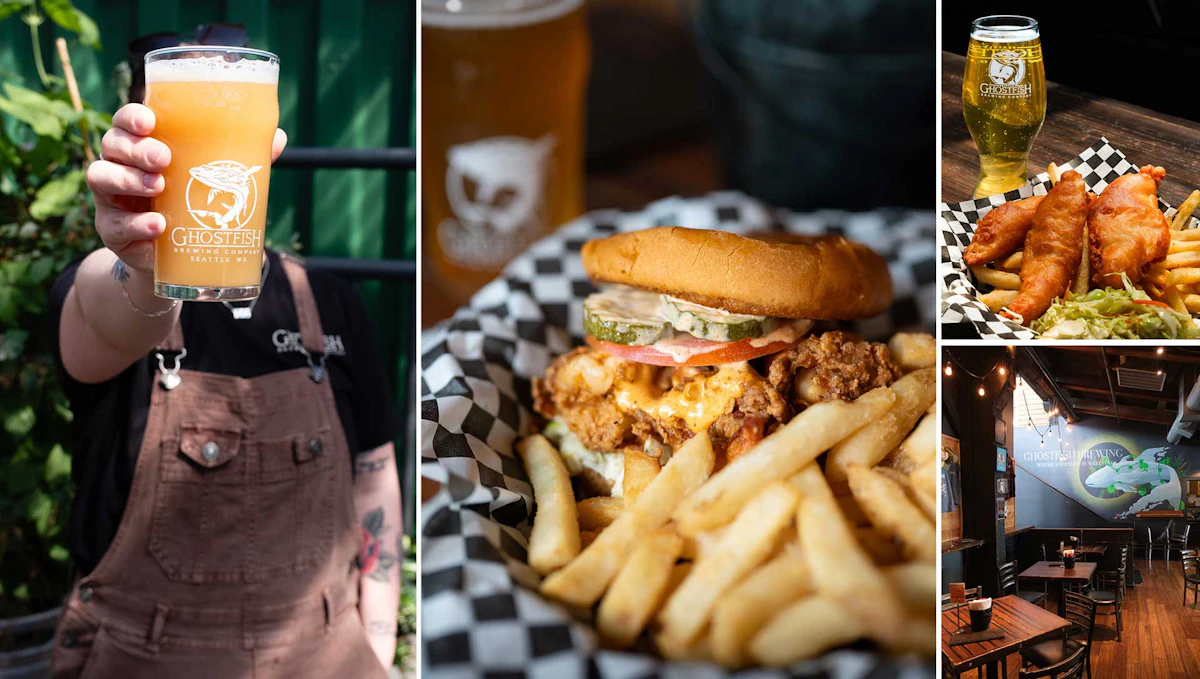
On-premise sales represent only about 20 percent of Ghostfish’s volume, but they’re also growing. Mauro cites increased keg sales in Washington state and Ohio as well as parts of New York and Pennsylvania. As with the off-premise, the gluten-free angle is a boon to Ghostfish. Accounts with kitchens that use the beer in gluten-free menu items such as fish and chips or beer-cheese dip are the most natural fits, Mauro says, as the demand between bar and kitchen helps to ensure consistent keg volume.
She says she sees room for growth in both channels, particularly because increased brewing capacity means Ghostfish can supply its distributors with the volume they’re asking for rather than constantly juggling delivery timing to ensure no one is completely shorted.
“Not having to play that game of Tetris with orders is just going to be a lot, a lot easier,” she says.
The Payoff
Making gluten-free beer isn’t necessarily difficult. Making delicious gluten-free beer—the kind that competes on merit in a craft-heavy city such as Seattle—is quite difficult. But that’s the brewery’s mission and its rallying cry.
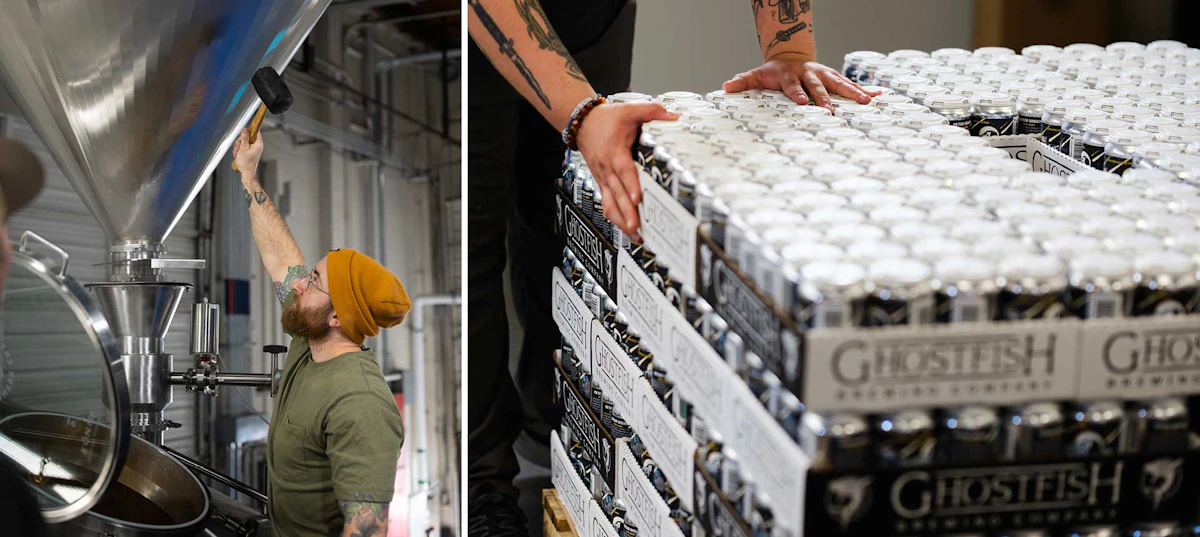
Ghostfish’s wins at the highest levels of competition—including eight Great American Beer Fest medals—speak to the quality. It takes a lot of work to achieve it. Reid Ackerman, Ghostfish’s head brewer, says the challenges of gluten-free ingredients aren’t just related to physical properties, such as a lack of enzymes. They’re also economic: Gluten-free grains aren’t malted in the same volumes as barley, and they’re five to 10 times more expensive.
With fewer suppliers, they’re also vulnerable to supply-chain disruptions, so Ghostfish attempts to spread its purchasing among multiple malthouses; they include Colorado Malting in Alamosa, Colorado; Grouse Malt House in Wellington, Colorado; Miller Malting in Cascade, Iowa; and Eckert Malting in Chico, California.
Ingredient costs are constantly on Ackerman’s mind, and they drive other decisions in the brewhouse. For example, Ghostfish uses stickered labels so it can buy unprinted cans in bulk. Ackerman also repitches yeast and chooses thiol-boosting, biotransformative strains that can help him reduce hop expenditures.
While all that is challenging—particularly without a widely available catalog of knowledge to guide him in developing tasty gluten-free recipes—Ackerman derives satisfaction from the challenge. Brewing gluten-free beer of the highest quality isn’t just a technical puzzle to solve—it’s one with high personal payoff.
For example: When Ghostfish brewed an Oktoberfest lager last year, it meant that someone like Andrews was able to join in that quintessential drinking ritual for the first time since removing gluten from his diet.
“It’s easy to get lost in the grind,” Ackerman says. “Maybe you had a rough day, and you’re at the [Ghostfish] bar and somebody’s in tears because they haven’t had a witbier or whatever in forever. ... That definitely makes it worth it.”
Plus, Andrews’ bars wouldn’t dedicate a precious draft line to Ghostfish Grapefruit IPA if it didn’t make financial sense. He estimates that up to a third of people who order it don’t even realize it’s a gluten-free beer.