

The brewing team at UPP Liquids is among the most awarded in the country, with more than 30 World Beer Cup and Great American Beer Festival medals in their trophy case.
But for the first month or two that UPP Liquids was in operation under that name, thirsty customers in Bend, Oregon, might not have even known the brewery existed.
“You could be in our parking lot and search ‘brewpubs near me’ on Google Maps, and we wouldn’t come up,” says co-owner and brewer Tonya Cornett.
Why were they invisible? Because when the business transitioned from Immersion Brewing to UPP Liquids, reflecting the addition of new owners, websites such as Google Maps and TripAdvisor didn’t pick up on the change. That was, to put it lightly, not great. It took many customer-service emails to eventually resolve the issue, but it was a clear reminder to the new owners: While beer is the bulk of what defines a brewery, there are plenty of niggling details that matter almost as much.
Today, a year after the debut of UPP Liquids, the wheels are turning more smoothly. Immersion cofounders Sean Lampe and Amanda Plattner remain co-owners of UPP; joining them are Cornett, Ian Larkin, Jose Ruiz, and Ben Shirley—all fellow members of the former innovation team at nearby 10 Barrel Brewing.
Among brewers and aficionados, Cornett’s reputation precedes her. After nearly 25 years of brewing in Bend, Cornett’s accolades include the 2024 Russell Schehrer Award for Innovation in Craft Brewing. She’s also the first brewmaster to win the Oregon Beer Awards’ Brewery of the Year with two different companies.
Ask colleagues about Cornett, and you’ll hear words such as “super-professional,” “legend,” and “world-class.” Even if the general public doesn’t know who’s behind the fermentors at UPP, the team’s talent for hospitality and for brewing a variety of beer, seltzer, and ciders is palpable.
“I have no qualms calling it the most exciting brewery in Bend,” says Brian Yaeger, organizer of Grand Craft Beer, a series of Oregon beer festivals and events, including Grand Craft Bend. “Not the least reason is that they have a great, vibrant taproom. You walk in there, and it’s never empty. ... It’s current, but it remembers what made the industry so great.”
That blend of tradition and innovation feels particularly relevant in the current business climate. UPP is identifying the middle ground between the Bend craft-beer scene that cheered for Immersion and the 10 Barrel crew, even as it welcomes a new generation of drinkers—not just beer fans—into the fold.
A Fresh Start
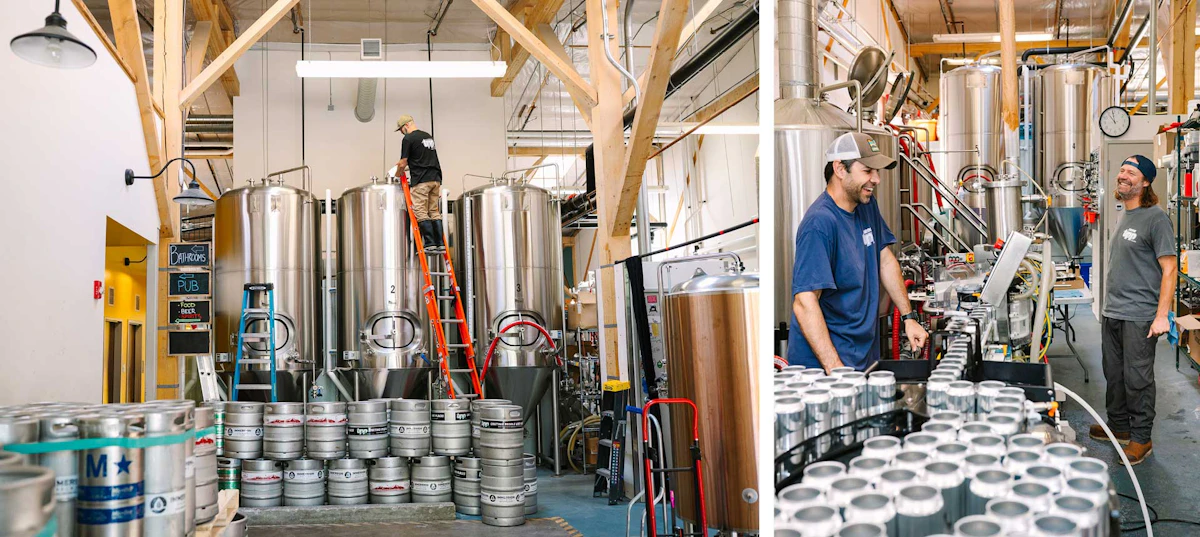
Founded in 2016, Immersion typified an era of Pacific Northwest brewpubs. It distinguished itself by offering a brew-your-own model, which became impossible during COVID.
The brewery sold its brew-your-own system during the pandemic, Lampe says, and it “flatlined”—it wasn’t failing, but it wasn’t thriving as it had been in those early years. He and Plattner began wondering what would come next.
Cornett, freshly out of a job, was wondering the same thing about her future. Despite a track record that put 10 Barrel’s innovation team in the upper echelons of brewing, parent company Tilray Brands laid off that entire group in September 2025. (Industry reaction followed the typical stages of grief: denial, anger, and finally, grudging acceptance.)
After the layoffs, Cornett, Larkin, Ruiz, and Shirley reached out to Immersion— their notion was to establish an alternating proprietorship to brew beer on Immersion’s system. Shortly thereafter, Immersion’s brewer left, and Lampe asked Cornett and her crew to step in and keep Immersion afloat temporarily. Conversations continued, and the group found a mutual path forward: The former 10 Barrel brewers would join as co-owners and transform Immersion into something brand new, greater than the sum of its parts.
“It quickly changed to, ‘What if you guys bought into the company and covered the rebrand costs?’” Cornett says. “And so, that’s what we did.”
Any transition of that sort raises questions both practical and philosophical. How much should the new company reflect Immersion’s past? How much should change? What does Bend want from a brewpub in 2025, compared to what it wanted in 2016?
And, not least: What are we going to call this thing?
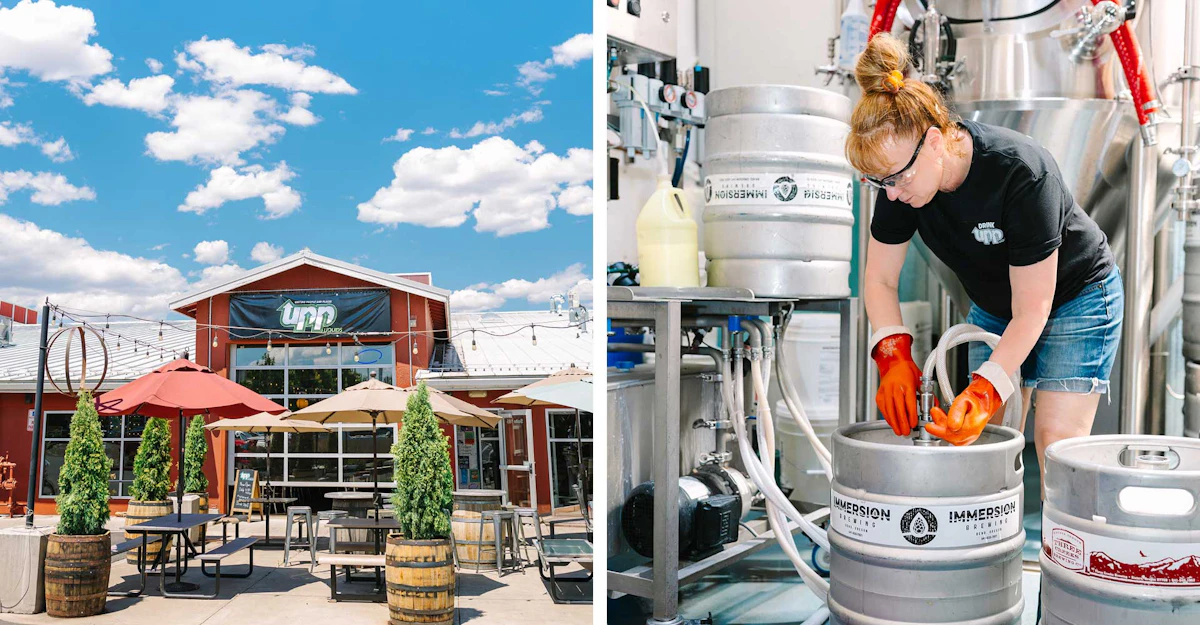
Ultimately, the team chose a name that they believed would unify past and present, reflecting the overall approach of the new business: Take what was best of Immersion but push forward with what Lampe calls “a new energy.” UPP stands for Uniting People and Places—the idea is to suggest momentum, lift, and progress, while also referencing the legacy of brewpubs as communal gathering places. (Less than six months in, UPP even added a mug club.)
The choice of “liquids,” rather than “beer” or “brewing company,” also was deliberate. On a typical week in mid-May, the brewpub’s 20 taps might be pouring a yuzu-ginger tart ale, a double IPA, a Belgian-style dark strong ale, a California common, a Mexican-style lager, an oatmeal stout, two collab beers, other seasonals, plus seltzer and cider made in-house. Session mead also makes an occasional appearance, and the UPP team hopes to add cocktails soon as well. (It will need an external partner to serve liquor, because of state alcohol laws.)
UPP exists in the center of the Venn diagram between tradition and progress, the old and the new. That’s part of what endears the brewery to Andy Polanchek, the head buyer and lead bartender at Bend’s Midtown Yacht Club, a beer bar and food-truck hub. Polanchek worked with Cornett years ago when she was at Bend Brewing, and even then, he says, he recognized her brewing talent.
Today, UPP’s beers are stalwarts on his menu. He hosted a tap takeover for the brewery in April, tapping five of their beers and dedicating an entire shelf to UPP six-packs.
“I was so excited to find out she was stepping out and doing something for herself and being more of an owner,” Polanchek says. “Now she can really experiment in all the ways she wants to.”
Driving the Own-Premise
One of UPP’s most notable departures from Immersion is packaging its beer for self-distribution across the state of Oregon.
Unfortunately, given the rising cost of cans, fuel, and other materials, it’s not a revenue driver, though the team members still believe it’s worth it to get the visibility and help drive taproom visitation. UPP also lacks cold-storage space, so the brewery pays to store cold beer at a partner site.
“We’re not making a ton of money” on canned beer, Cornett says, “but we’re just looking at it as an advertising expense and seeing that it actually is drawing people here.”
One thing the brewery does have in spades? Owners who can personally drive that beer all over the state, including the 175-mile, three-hour trip to Portland. “Well, there are six of us,” Cornett says, laughing. “So that helps.”
Lampe says that brewing 800 to 1,000 barrels of beer this year, most of it sold over the brewpub’s bar, would put the brewery on a solid trajectory. UPP also has streamlined the beers it cans—keeping only the six fastest-moving ones—to reduce complexity and expenses.
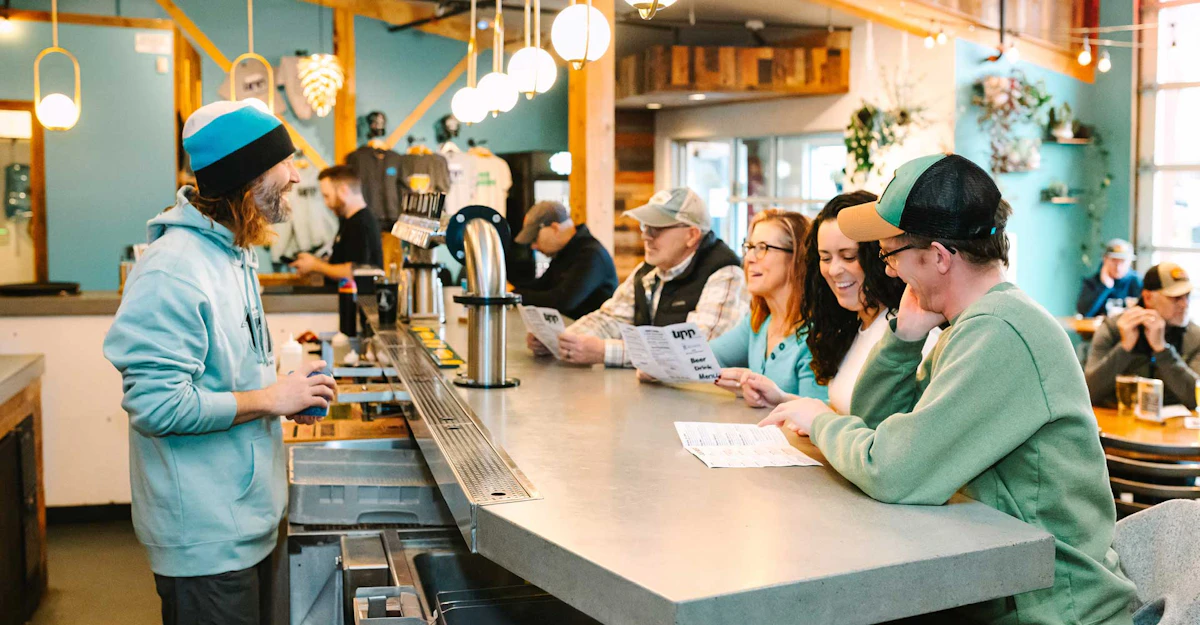
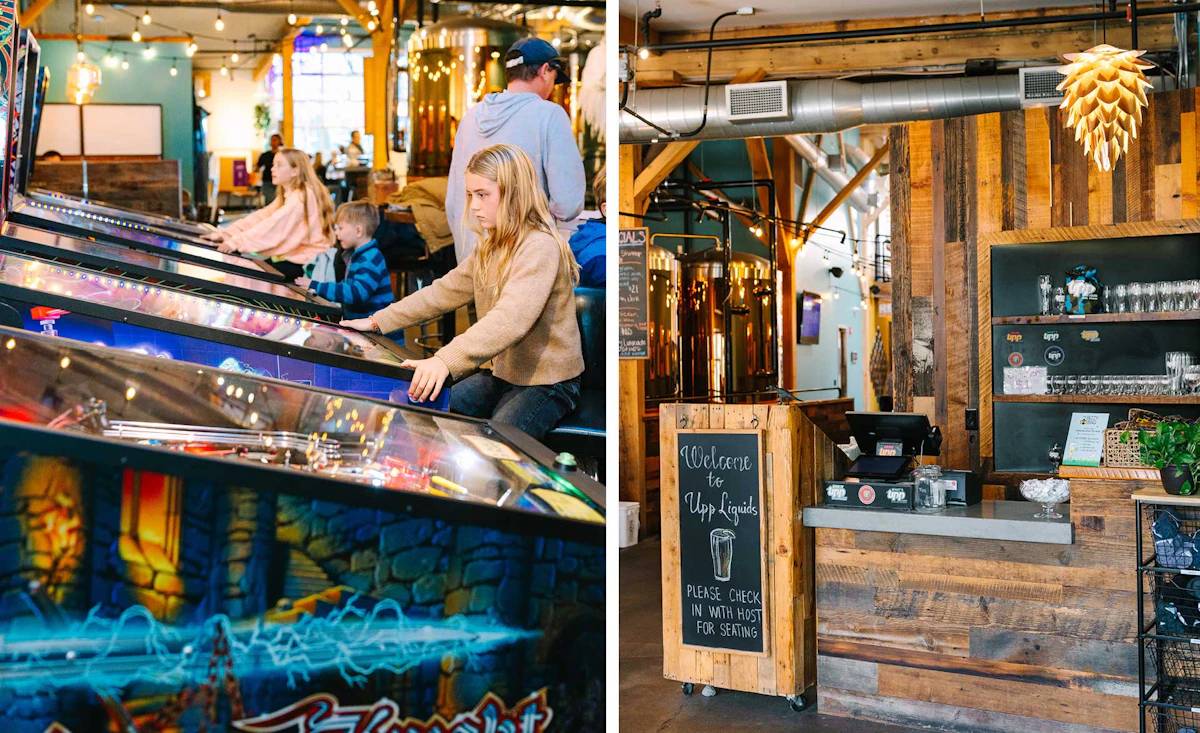
However, the real focus is on the experience within the brewpub’s four walls. Immersion closed for just a week before reemerging as UPP with a fresh coat of turquoise paint and a temporary sign. There’s no Instagrammable neon, no selfie wall. But there are pinball machines, garage doors that open to fit happy-hour crowds, and a barrel room that hosts everything from comedy nights to full-on weddings. The team hopes that visitors see it as a classic brewpub as well as a modern place where new drinkers and young families feel comfortable.
“There are cute touches, but it doesn’t feel overwrought or like some branding guru came in and did it,” Yaeger says. “It still has a very homemade feel to it. And when you go in there, you truly see a very wide demographic—young drinkers, families, old-timers.”
Cornett and Lampe emphasize the “welcoming” aspect of brewpubs. They train their staff to greet customers the moment they walk in and to offer to validate parking. When UPP first opened, it offered $3 pints on Thursdays—a deal that was, in fact, too good to be true. So, they increased the price to $4, which is still about the cheapest beer—of any kind—you’ll find around Bend.
Because of the promotion, the business sees about 100 more customers on a Thursday night compared to other weeknights. The goal is to reintroduce locals to the brewery’s new look and to cement itself as their regular spot. The reliable atmosphere combined with an always-fresh draft list appears to be working.
“It’s not 15 hazy IPAs,” Yaeger says. “It is an absolute correct balance of hop-forward beers, light beers, sour beers, fruit beers, and also remembering they can still play around and challenge people to try a beer with chamomile or cardamom in it, in a way that you largely don’t see anymore.”
Onward and UPPward
When you’re already brewing world-class beer, the devil is in the million other details.
UPP’s owners have a laundry list of goals and to-dos: reducing packaging costs, tweaking the food menu, possibly launching a beer-dinner series, installing a permanent sign, continuing to expand their social-media presence, and figuring out how to adjust to a newly constructed building that recently ate up 90 percent of the brewpub’s parking.
Oh, and the team is scouting for a second location. Ideally, they say, it would be taproom-only, no kitchen, and it would be in one of the mountain towns around Bend. A second taproom would boost the brewery’s own-premise sales and, they expect, start delivering some economies of scale. But the team is taking a slow approach, waiting for stars to align—just as they did in bringing the Immersion and the ex–10 Barrel teams together.
“We’re looking for an opportunity to kind of land in our laps,” Cornett says. “Sometimes that happens.”
The support UPP has within Bend and across Oregon’s beer community makes the road ahead easier. Retailers are eager to carry UPP’s beers, and other brewers root for the team like they’re a sports franchise. There’s a palpable sense that the business is going about its brewing and its operations the right way, if not necessarily the old way. They’re building a brewpub for the modern moment, guarding the flame of OG craft while feeding new fuel to the fire.
“It’s exciting to see these old-school brewers come full circle, and to see everyone blossom and have their own breweries, doing their own thing,” Polanchek says. “They got into the business because they love the industry. They could go brew beer anywhere, and they’ve stayed in Bend.”